Filed Under: Technical SEO Resources, Programmatic SEO
Summarize this Post using AI




Programmatic SEO (pSEO) has been trending heavily within SEO communities and specifically among technical SEOs. It represents a shift from writing content one page at a time to engineering content systems that can deploy thousands of high-quality pages instantly.
Personally, I have implemented a Programmatic SEO campaign at a scale of 3.5K pages, and by the end of this article, you will have all your questions regarding this topic answered with real-world examples.
And if you need a help with your Programmatic SEO for your business needs, your can directly request my Programmatic SEO Service and let’s discuss how can I help you as a Technical SEO Consultant.
Start My pSEO CampaignWhat Is Programmatic SEO Or pSEO?
Programmatic SEO is the practice of automatically generating a large number of landing pages at scale by using a database of information and a pre-designed website template.
Instead of manually writing a distinct article for every keyword, you identify a pattern of search queries (e.g., “Best hotels in [City]”) and build a system that dynamically creates a page for every variable in that pattern. It is the intersection of code, data, and SEO strategy.
Programmatic SEO vs. Traditional SEO: The Core Differences
To understand the power of pSEO, you must contrast it with the traditional editorial approach.
| Feature | Traditional SEO | Programmatic SEO |
|---|---|---|
| Creation Method | Manual writing (1 page at a time) | Automated generation (1000s of pages) |
| Target Keywords | High-volume, broad head terms | Low-volume, high-intent long-tail terms |
| Scalability | Linear (limited by writer capacity) | Exponential (limited by data quality) |
| Maintenance | Update each post individually | Update the database/template once for all pages |
Why Programmatic SEO is Important for Your SEO Organic Growth?
1. Dominating Long-Tail Search Intent
Traditional SEO often ignores keywords with low search volume (e.g., 20 searches/month). However, pSEO allows you to target thousands of these variations. If you create 5,000 pages that each get only 10 visits a month, that is 50,000 new monthly visitors from highly specific, high-converting queries.
2. Efficiency and Speed
Once your dataset is clean and your template is optimized, publishing 10,000 pages takes roughly the same effort as publishing 10. This speed allows new startups to compete with established giants by covering topical authority maps in days rather than years.
3. User Experience at Scale
Users searching for “Best Italian restaurant in [Neighborhood]” don’t want a 2,000-word blog post; they want a list of data (reviews, hours, menu). pSEO serves this intent perfectly by presenting structured data immediately.
How Programmatic SEO Works: The Technical Architecture
For a Technical SEO, understanding the “how” is vital. A successful pSEO build consists of three layers:
- The Dataset (The “Source”): This is your CSV, AirTable base, or SQL database containing the variables (e.g., City Name, Weather Data, Flight Price).
- The Template (The “Structure”): A single page design with placeholders like
{City_Name}or{Price}. - The Engine (The “Connector”): The tool that merges data into the template to generate unique URLs. This could be a Python script, a WP All Import job, or a specialized tool like Whalesync.
6 Real-World Programmatic SEO Examples That Succeeded in SERPs
Below are six powerful examples of Programmatic SEO in action, ranging from B2B directories to massive consumer aggregators. The “site:” paths below reveal the specific URL patterns these companies use to scale their indexation.
1) Agency Partners Platform By Semrush

Agency Partners Platform Homepage By Semrush
Scale: ~54,000 Indexed Pages
Pattern:
site:https://agencies.semrush.com/list/
Semrush built a massive B2B directory connecting businesses with marketing agencies. Instead of writing a blog post for every agency, they created a templated profile system. This allows them to rank for thousands of “marketing agency in [City]” and “SEO experts in [Region]” queries, effectively turning their user base into lead-generation content.
2) Currency Converter Pages By Wise
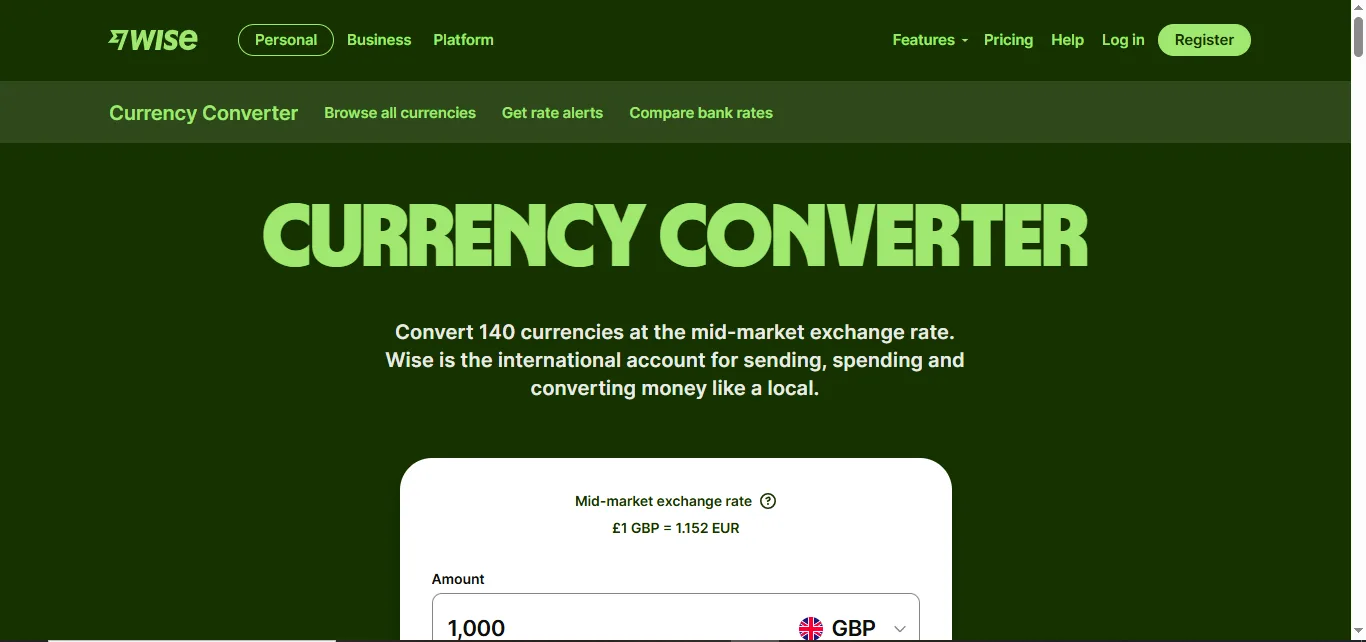
Currency Converter Homepage By Wise
Scale: ~21,500,000 Indexed Pages
Pattern:
site:https://wise.com/*/currency-converter/*
Wise demonstrates the explosive scalability of International Programmatic SEO.
Their massive index count (21.5M) is achieved not just by targeting every currency pair (e.g.,
USD to EUR), but by multiplying those pairs across nearly every language. The first wildcard
* in their path represents language subdirectories (e.g., /fr/,
/es/), allowing them to capture global search volume for currency conversion
intent.
3) Destination Pages By Lyft
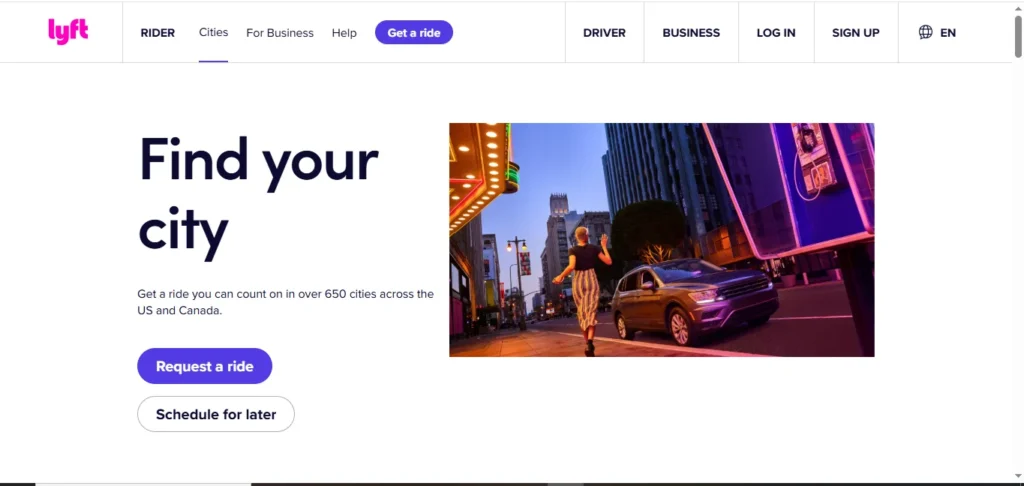
City Rider By Lyft Homepage
Scale: ~425,000 Indexed Pages
Pattern:
site:https://lyft.com/rider/*/*
Lyft targets hyper-local travel intent by generating landing pages for specific routes and destinations. Their URL structure typically follows a State/City or Route hierarchy. This strategy captures high-intent users searching for “rideshare to [Airport]” or “taxi in [City],” funneling them directly into the rider app ecosystem.
4) Freelance Job Pages By Upwork
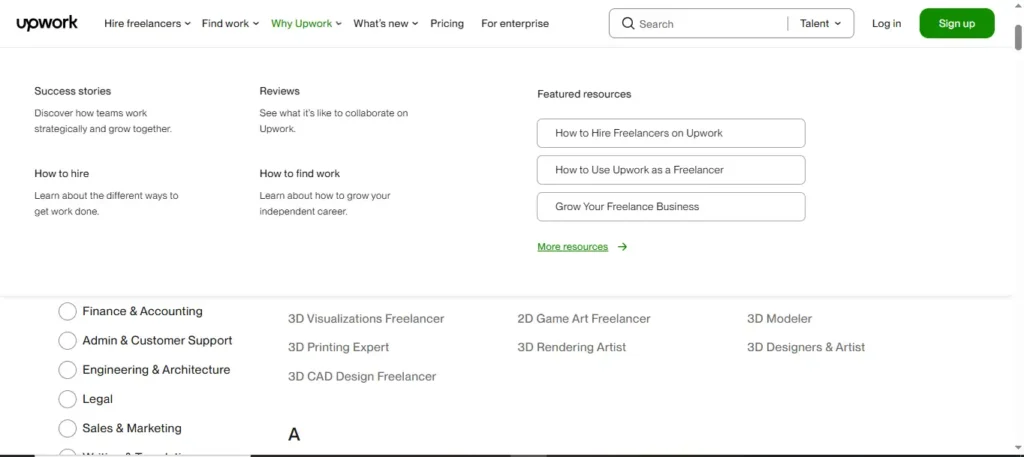
Freelance Job Pages By Upwork
Scale: ~268,000 Indexed Pages
Pattern:
site:https://www.upwork.com/freelance-jobs/*/
Upwork uses pSEO to bridge the gap between employers and freelancers. By programmatically
generating pages for specific skills and job titles (e.g., “freelance python developers,” “logo
designers”), they capture bottom-of-funnel traffic. The freelance-jobs subdirectory
acts as a clean container for these skill-based landing pages.
5) Lawyers Directory By Justia

Lawyers Directory Homepage By Justia
Scale: ~922,000 Indexed Pages
Pattern:
site:https://www.justia.com/lawyers/*/*/*
Justia utilizes a deep, three-layer folder structure (likely State / County / Practice Area) to dominate legal search results. This granular approach ensures that whether a user searches for “Criminal defense lawyer in Miami” or “Personal injury attorney in Dade County,” a specific, relevant pSEO page exists to satisfy that query.
6) Remote And Local Jobs By ZipRecruiter
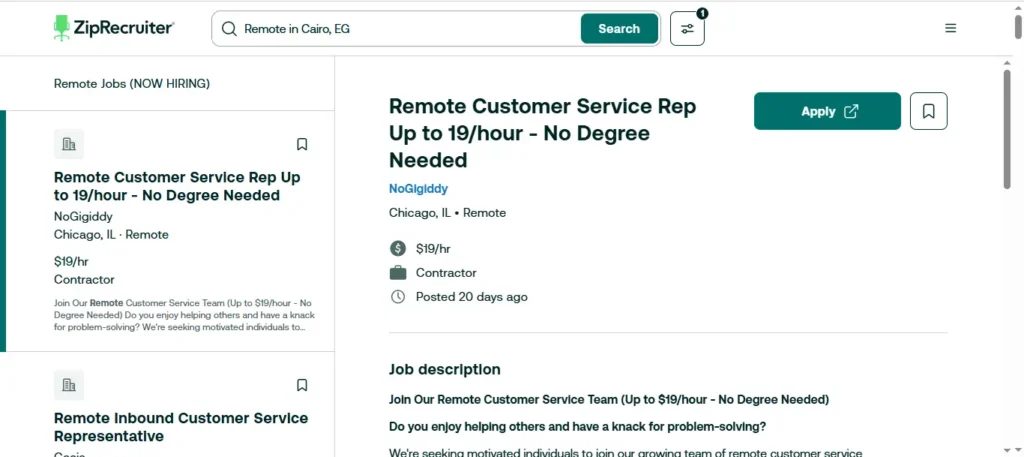
Remote And Local Jobs By ZipRecruiter Homepage
Scale: ~11,900,000 Indexed Pages
Pattern:
site:https://www.ziprecruiter.com/Jobs/*
ZipRecruiter operates one of the largest pSEO implementations in the jobs niche. With nearly 12 million indexed pages, they aggressively target job titles combined with locations (e.g., “Nurse jobs in Austin”). Their system dynamically creates and retires pages as job listings flow in and out, maintaining a massive footprint for employment-related queries.
Commonly Asked Questions about Programmatic SEO
What are the Main Challenges that Face Programmatic SEO Campaigns?
1. Indexing & Crawl Budget
The biggest technical hurdle is getting Google to efficiently crawl and index thousands of newly generated URLs without wasting resources on duplicates or low-value variations, which is why controlling crawl paths and indexability signals must be part of the launch plan from day one.
If your site has low authority (or produces many near-duplicate URL variations), Googlebot may delay discovery/crawling or keep many URLs in excluded states, so this topic connects directly to your guides on Crawl Budget and Indexing.
- Solution: Ensure robust internal linking and use an “IndexNow” API or sitemap splitting strategy.
2. Thin Content & Cannibalization
If your pages are too similar (e.g., only the city name changes), Google may treat them as Doorway Pages.
- Solution: Enrich every page with unique data points, distinct images, and AI-generated unique summaries.
3. Quality Assurance
A broken token in your template means you now have 5,000 broken pages.
- Solution: Always run a “canary test” (publish 10-20 pages) before doing a full run.
When exactly Programmatic SEO fails to achieve its goal?
It fails when there is a Search Intent Mismatch. If you generate 1,000 pages for “Best X in Y” but the user wants a human-written review and you give them a generic data table, you will have high bounce rates and low rankings. It also fails if the data quality is poor or outdated.
Can I do A/B testing before scaling on more Programmatic SEO Pages?
Absolutely. In fact, you should. Create two different templates for a small subset of your data (e.g., 50 pages for Template A and 50 for Template B). Monitor which batch gets indexed faster and ranks higher over 3-4 weeks before rolling out the winning template to the remaining 3,000 pages.
Do Sitemaps splitting help in Indexing for Programmatic SEO Pages?
Yes, A single
sitemap with 50,000 URLs can be hard to diagnose. Splitting sitemaps by
category (e.g., sitemap-new-york.xml, sitemap-california.xml) allows
you to see in Google Search Console exactly which “clusters” of pages are having indexing
issues, making troubleshooting significantly easier.